Surgical elevators
Surgical elevators are specialized dental instruments used primarily in oral surgery and periodontal procedures. Their main function is to loosen, elevate, and extract teeth, roots, or other hard tissues from the surrounding socket or tissue. They help in detaching the periodontal ligament and disrupting the bony support to facilitate tooth removal with minimal trauma.
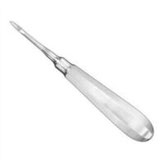
bone elevator
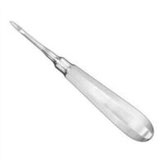
periosteal elevator
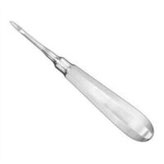
podiatry elevator
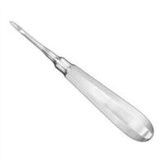
skin elevator
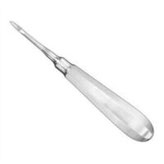
cobb elevator
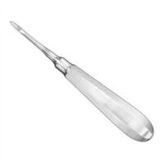
septum elevator
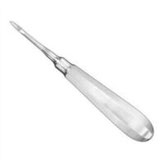
suction elevator
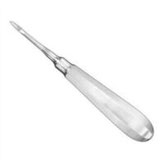
zygomatic elevator
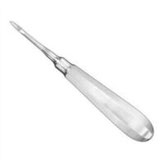
cottle skin elevator
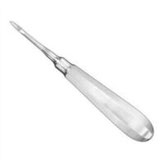
freer elevator
Uses
They have several uses in oral surgery and periodontics, primarily focused on separating and removing teeth or other hard tissues:
Tooth extraction - are crucial for loosening teeth from their sockets, especially when the tooth is impacted, fractured, or otherwise difficult to remove. They are used to create space and leverage for the forceps. They can also be used to gently lift out teeth that are loose but not completely dislodged.
Root extraction - are essential for removing roots. They can carefully detach the root from the surrounding bone and periodontal ligament, making it easier to remove with forceps.
Removing impacted teeth - are often used to carefully separate and expose the tooth for easier removal.
Preparation for periodontal surgery - are used to create space and access for periodontal procedures such as flap surgery. This is done to expose the diseased tissues for treatment.
Removal of retained roots - can be used to carefully remove it.
Removing bone fragments - can aid in removing small bone fragments that might be interfering with access or creating complications during a procedure.
Exposing impacted wisdom teeth - help to create space and access for surgical removal.
What are the advantages of using elevators in difficult extractions ?
Using them in difficult extractions offers advantages such as improved leverage and control, which facilitate loosening and mobilizing the tooth more effectively. They help in reducing the amount of force applied directly to the surrounding tissues, thereby minimizing trauma and postoperative discomfort. They also allow for better access to the periodontal ligament space, aiding in the careful separation of the tooth from the socket. Additionally, they enable the surgeon to navigate around adjacent structures more precisely, decreasing the risk of fracture or damage to neighboring teeth and tissues.
How are they sterilized before use ?
They are sterilized before use by first cleaning them thoroughly to remove any debris and tissue residues, typically using an ultrasonic cleaner or manual scrubbing with detergent. After cleaning, they are rinsed with sterile water or saline to eliminate any remaining contaminants. The instruments are then dried completely to prevent corrosion. Finally, they are sterilized using methods such as autoclaving (steam under pressure), which is the most common and effective method, or other approved sterilization techniques like chemical sterilants or dry heat sterilization, ensuring they are free of any microbial contamination before use.
How does the design of a surgical elevator aid in minimizing trauma ?
The design of it aids in minimizing trauma by featuring a slender, tapered, and smooth-edged blade that allows for precise and gentle application of force to loosen teeth or tissue without excessive pressure. Its ergonomic handle provides a secure grip, enabling controlled movements, while the angled or curved blade facilitates access to difficult areas with minimal tissue manipulation. Additionally, the smooth surfaces and rounded edges help reduce tissue tearing and trauma during use.
What are the different sizes of them, and how are they chosen ?
Elevators for surgery come in various sizes, typically ranging from small to large, to accommodate different clinical situations and anatomical considerations. The choice of size depends on factors such as the size and location of the tooth or tissue to be elevated, the strength needed for the procedure, and the accessibility of the surgical site. Smaller elevators are used for delicate or minor procedures involving smaller teeth or tissues, offering precision and minimizing trauma. Larger elevators provide greater leverage and strength for removing larger teeth or dealing with more resistant tissues. The selection is also influenced by the surgeon’s preference and experience, ensuring optimal control and effectiveness while reducing the risk of tissue damage.