Surgical mallets
Surgical mallets are specialized medical instruments resembling small hammers, designed for precise and controlled strikes during surgical procedures. They are primarily used in orthopedic surgeries to assist in breaking, shaping, or inserting bones and implants. Their construction typically features a heavy, durable head and a handle that allows surgeons to apply force accurately, ensuring minimal damage to surrounding tissues.
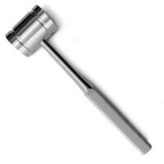
bone mallet
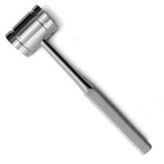
cloward mallet
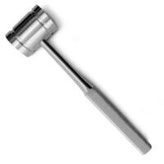
bergman mallet
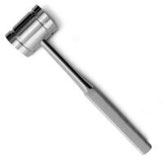
collin mallet
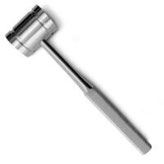
heath mallet
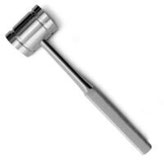
crane mallet
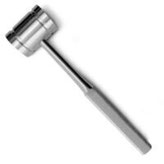
ombredanne mallet
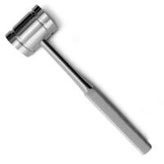
lucae mallet
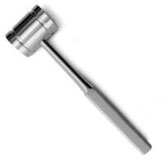
orthopedic mallet
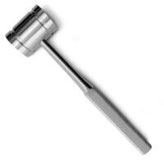
gerzog mallet
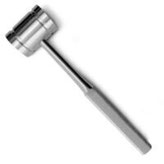
hajek mallet
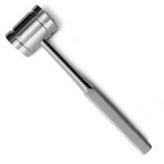
mead mallet
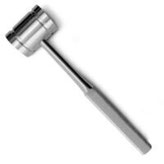
kirk mallet
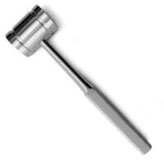
partsch mallet
What materials are commonly used to make these mallets ?
They are typically constructed from materials that combine strength, durability, and the ability to withstand sterilization processes. Aluminum is frequently used for the heads because it is lightweight, corrosion-resistant, and easy to sterilize, making it suitable for repeated use in sterile environments. Stainless steel is another common material, valued for its exceptional durability, strength, and resistance to rust and corrosion, ensuring longevity and maintaining hygiene standards. In some specialized cases, titanium is employed due to its high strength-to-weight ratio, excellent biocompatibility, and corrosion resistance, making it ideal for surgical instruments that require both durability and minimal weight. These materials are chosen carefully to ensure that the mallet can deliver effective force during procedures while maintaining safety and ease of sterilization.
How does the weight of a surgical mallet affect its use in surgery ?
The weight plays a significant role in its effectiveness and ease of use during surgery. A heavier mallet provides more momentum and force with less effort from the surgeon, which can be beneficial when delicate or forceful strikes are needed to break or shape bone or other tissues. This can improve precision and reduce fatigue during prolonged procedures. Conversely, a lighter mallet offers greater control and maneuverability, allowing the surgeon to make more delicate and accurate taps without exerting excessive force. The appropriate weight depends on the specific surgical task; too heavy a mallet might cause unintended damage or reduce finesse, while too light might require more force and effort, potentially leading to less precision. Therefore, the weight must be balanced to optimize both control and impact, enhancing surgical outcomes and safety.
In which types of surgical procedures are mallets most commonly used ?
They are most commonly used in procedures that involve the manipulation or removal of bone, such as orthopedic surgeries, craniofacial surgeries, and dental procedures. In orthopedic surgeries, they are frequently employed to help insert or remove implants, to fracture bones intentionally in controlled ways, or to assist in joint replacements. Craniofacial surgeries often utilize mallets for precise shaping or repositioning of facial bones and skull segments, where controlled force is essential. In dental procedures, especially during oral surgeries like the extraction of impacted teeth or the placement of implants, mallets are used to gently tap and position components with accuracy.
How does the size of a mallet for surgery impact its maneuverability ?
The size directly impacts its maneuverability, with smaller mallets generally offering greater ease of handling and control, making them suitable for delicate or precise tasks. Their lighter weight allows for more nuanced taps and reduces fatigue during prolonged use. Larger mallets, on the other hand, tend to be heavier and bulkier, which can make them more cumbersome to maneuver, especially in confined surgical fields. However, they can deliver greater force with less exertion, which is beneficial for tasks requiring more substantial impact. Ultimately, the size must be chosen to balance force application with control, ensuring the surgeon can operate efficiently without sacrificing precision or comfort.
How should surgical mallets be cleaned and sterilized after use ?
They should be thoroughly cleaned after use by first removing any debris or tissue residues with warm water and a soft brush or cloth. They should then be washed with a suitable enzymatic detergent or medical-grade cleaning solution to ensure all organic material is broken down. Rinsing thoroughly with sterile water follows to remove any detergent residues. For sterilization, most mallets are made of metal and can be sterilized using methods such as autoclaving, which involves high-pressure saturated steam at 121 to 134 degrees Celsius for a specified duration. If the mallet has non-metal components or delicate parts, alternative sterilization methods like low-temperature hydrogen peroxide gas plasma or ethylene oxide gas may be appropriate. After sterilization, the mallet should be dried thoroughly and stored in a clean, sterile environment until its next use. Proper cleaning and sterilization are essential to prevent infections and maintain instrument integrity.
What signs indicate that it needs to be replaced ?
It needs to be replaced if there are visible cracks or fractures in the head or handle, significant wear or deformation that affects its performance, or if it has become unbalanced or damaged to the point that it cannot be used safely or effectively.
What are the key features to look for when selecting a mallet ?
When selecting a surgical mallet, it is important to consider several key features to ensure safety, durability, and effectiveness during procedures. The material of the mallet's head and handle should be of high quality, typically made from stainless steel or other corrosion-resistant alloys, to withstand repeated sterilization and reduce the risk of contamination. The durability of the materials is crucial, as the mallet must resist cracks, fractures, or deformation over time. The weight and balance of the mallet play a significant role in providing precise control and reducing surgeon fatigue; a well-balanced tool allows for accurate force application during delicate procedures. The design should prioritize ergonomic considerations, offering a comfortable grip that minimizes hand strain and allows for steady handling. Ease of cleaning and sterilization is also essential, so smooth surfaces without crevices or complex joints are preferred to facilitate thorough sterilization processes. Additionally, it is beneficial to select a mallet that complies with relevant safety and quality standards to ensure reliability and safety during use.